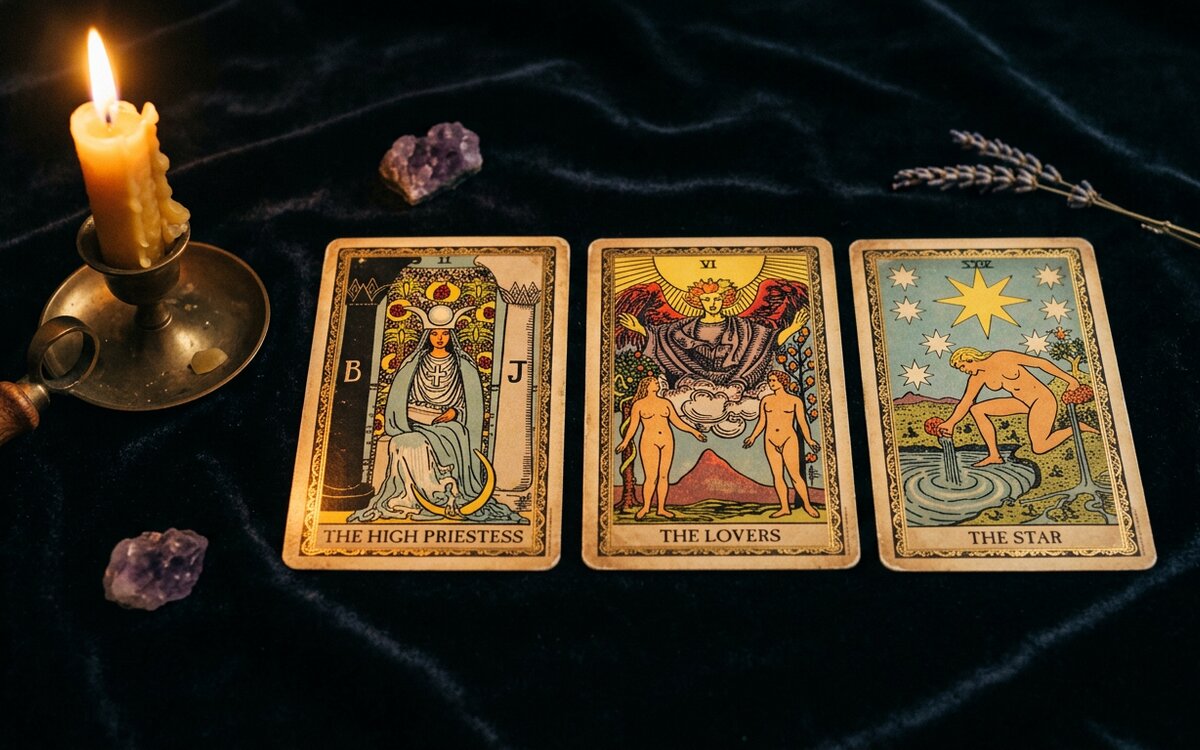

We get it: when you’re anxious, you want a clean answer—yes or no, like flipping a coin with prettier pictures. Yes/no tarot can be fun for a quick vibe check. But if you’ve ever walked away from a reading feeling oddly empty, the question shape might be why. This post explains why open questions usually lead to richer tarot guidance—and how to rephrase what you’re really asking. Same ideas work in person in Jaipur or over a video call with a reader anywhere.
Why yes/no questions squeeze the cards
Tarot images carry layers: mood, timing, people, blind spots, inner conflict. A tight yes/no forces that story into a door that only opens or shuts. Sometimes the honest answer is “not yet,” “yes, but,” or “you’re asking the wrong thing”—and the cards want room to say so.
What you might actually want underneath a yes/no
- “Will they come back?” → “What do I need to understand about closure—or about trying again?”
- “Should I quit my job?” → “What’s wise for me to prioritise in work right now?”
- “Is this person The One?” → “How can I choose partners with clearer eyes?”
You’re not wrong for craving certainty. Life is loud. Open questions just invite the reading to meet you where the complexity is.
Better question starters (steal these)
- “What am I not seeing clearly about ___?”
- “What would support me in the next step with ___?”
- “Where am I giving my power away in this situation?”
- “What is this chapter trying to teach me?”
Notice: they invite reflection and choice—not a verdict from the sky.
When a yes/no pull still makes sense
Small decisions, playful timing, or a one-card “temperature check” can be fine—if both you and your reader agree it’s a light exercise, not a life sentence. The ethical line: no terror, no “you must,” no pretending probability equals destiny.
Respect goes both ways
Sitters: you deserve clarity about what kind of question fits the time slot you paid for. Readers: you deserve questions rough-drafted enough to shuffle toward— not “figure out my entire life in silence.” Meet in the middle like grown-ups.
If you only have two minutes
Try: “What’s the most helpful thing for me to focus on today?” One card, open frame, still room for nuance. You’ll probably learn more than “yes/no” about a crush you’ve already stalked online anyway.
Jaipur, India, and global online readings
Cultural context matters—family pressure, marriage timing, visa stress—but question quality still wins. A thoughtful reader helps you shape the prompt without judging your worry. Video or in person, the skill is listening as much as interpreting.
Closing thought
Tarot questions aren’t a quiz you can fail—they’re a way to start an honest conversation. Swap “Will it happen?” for “How do I meet this wisely?” and the cards get space to do what they’re good at: showing patterns, not locking doors. Your next step stays yours.