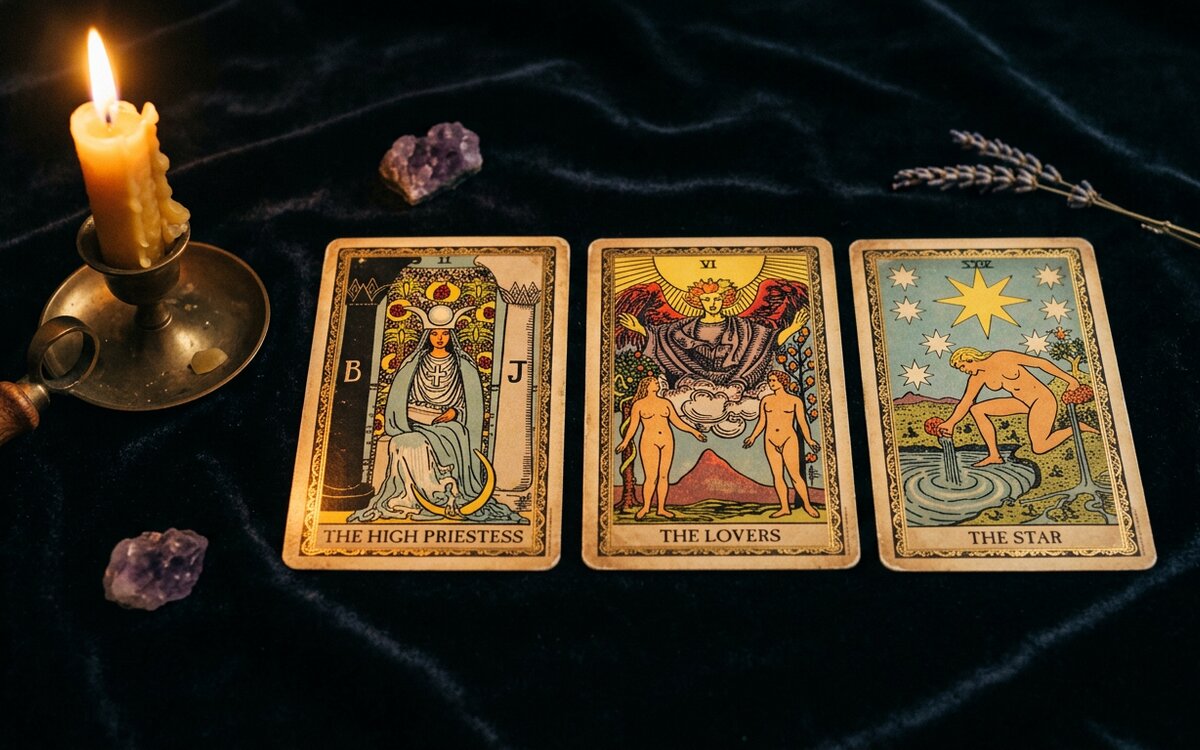
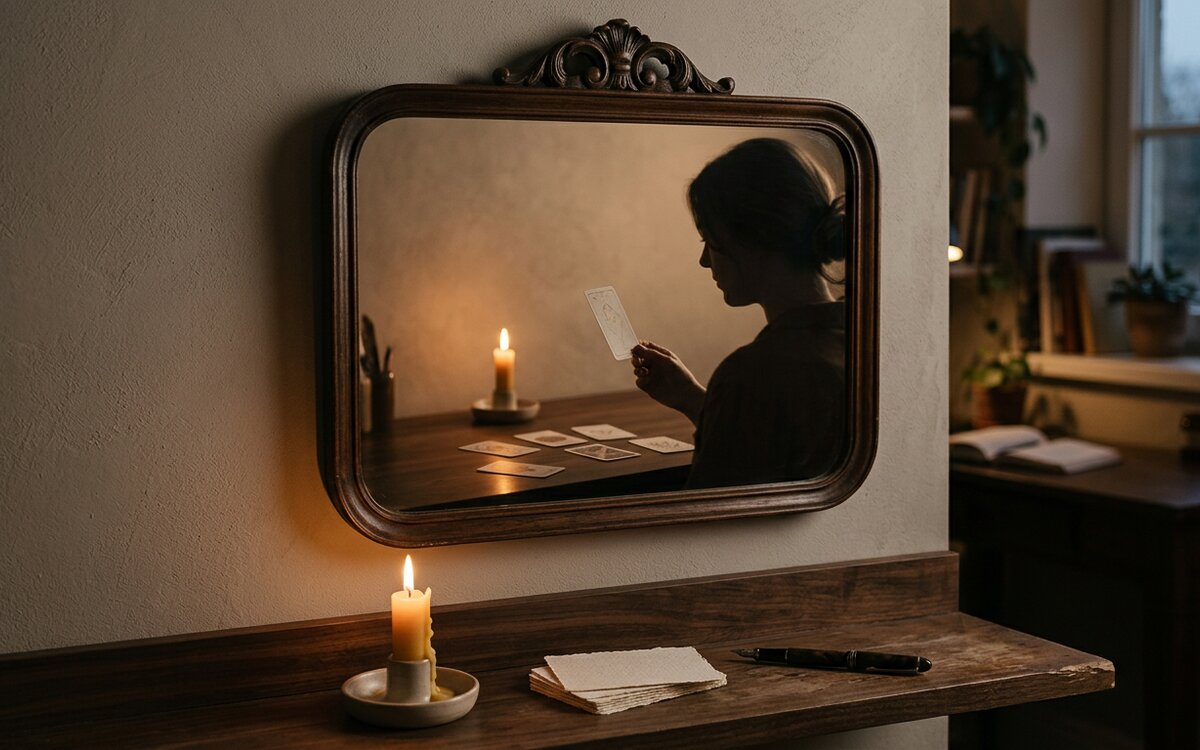
When a decision feels heavy—leave or stay, speak up or wait, take the offer or pass—your brain wants a shortcut. Tarot can feel like that shortcut: three cards, a story, a direction. Used well, it is something better: a mirror that helps you see what you already half-know. Used badly, it becomes a command you obey because anxiety is loud. This post is about tarot for decisions in the first sense: reflective, ethical, and yours to own—whether you sit with a reader in Jaipur or book online from anywhere.
Mirror vs command: the line that matters
A mirror shows angles: fears, desires, blind spots, timing, values. You still choose. A command sounds like fate: “The cards say you must.” Ethical tarot does not remove your agency. If a reading leaves you more scared than clear, or tells you there is only one path, step back. Good guidance widens your view; it does not shrink your options to a single order from the deck.
Why people reach for tarot when they decide
Big choices stir uncertainty: money, marriage, family expectations, career moves, relocation, health-related stress (tarot is not a substitute for medical advice—see a professional for that). Cards offer symbolic language when plain worry loops in circles. They can name a pattern—people-pleasing, rushing, avoiding conflict—so you can respond with intention instead of panic.
That is different from asking the universe to pick your job for you. The useful question is rarely “What will happen?” and more often “What am I not seeing?” or “What would honour my values here?”
What tarot can do for decision-making
- Clarify trade-offs: what you gain, what you risk, what you are avoiding.
- Surface values: safety vs growth, loyalty vs truth, short-term relief vs long-term fit.
- Reduce shame: normalise that two good options can both hurt someone.
- Suggest timing as a mood, not a guarantee: “heavy season” vs “lighter window”—planning language, not prophecy.
What tarot cannot do: replace spreadsheets, contracts, therapy, or conversations with people affected by your choice. It complements thinking; it does not erase the need to think.
Questions that keep you in the driver’s seat
Try prompts like these instead of “Should I do X—yes or no?”
- “What do I need to understand about this decision before I act?”
- “Where might I be underestimating risk—or overestimating it?”
- “What would self-respect look like in this situation?”
- “If I chose A vs B, what might each path ask of me emotionally?”
Open questions invite the cards to work with your judgment instead of pretending to replace it.
After the spread: a simple decision ritual
Whether you pull cards alone or with a reader, try a three-step close:
- Name the insight in one sentence—no mystic fog.
- List one real-world action (call someone, read a clause, sleep on it, book counselling).
- Date your choice—“I will decide by ___” or “I will gather these facts first.”
That keeps tarot from floating in the air while your life waits.
Journaling prompts (no deck required)
Write for five minutes on each:
- “If no one would be disappointed in me, what would I lean toward?”
- “What am I afraid will happen if I choose wrong—and is that story accurate?”
- “What would I tell a friend in my exact situation?”
Many clients find that journaling before or after a reading makes the cards stick as practical insight, not as a spooky verdict.
Readers and sitters: shared responsibility
Readers can refuse to play “oracle for life-altering commands.” Sitters can ask for reflective framing upfront: “I want perspective, not a single answer.” In Jaipur or on video, clarity at the start prevents hurt feelings when someone hoped the deck would lift all doubt. Doubt is human; tarot helps you relate to it, not pretend it never existed.
Culture, family, and “what people will say”
In many Indian contexts, decisions sit inside joint families, marriage timing, and career pressure. Tarot does not override respect or duty—but it can help you separate guilt from values and noise from facts. A card might highlight courage or boundaries; you still navigate elders and logistics in the real world. The mirror shows your inner weather; you still walk the street.
Red flags in decision readings
- Pressure to pay more because a card was “too negative.”
- Claims about health, legal outcomes, or guaranteed dates.
- Language that removes choice: “You have no option but…”
Walk toward readers who leave you steadier and more capable—not more dependent.
Online vs in-person: does the mirror change?
The symbolic work is the same; only the room changes. Some people focus better at home; others prefer face-to-face in a calm space. Pick what helps you speak honestly. Good audio and a clear question beat a dramatic setting.
Closing thought
Tarot for decisions works best when you treat the cards as a conversation with yourself—patterns, feelings, and values made visible—not as a boss giving orders. You keep the pen. The spread only helps you read your own handwriting a little more clearly, whether that happens in Jaipur or through a screen halfway across the world.