Some days love feels messy, work feels loud, and your inner voice keeps asking: Am I on the right track? If that sounds familiar, you’re in good company. Most of us want steadier relationships, work that fits, and a little more peace about “what’s next.”
That’s when birth chart reading shows up on people’s radar—not as a crystal-ball stunt, but as a way to slow down and see their own patterns more clearly. This blog keeps things simple: what a chart is, what it can hint at for love and career, and how it works whether you meet someone in Jaipur or over a video call abroad.
First things first: what is a birth chart, really?
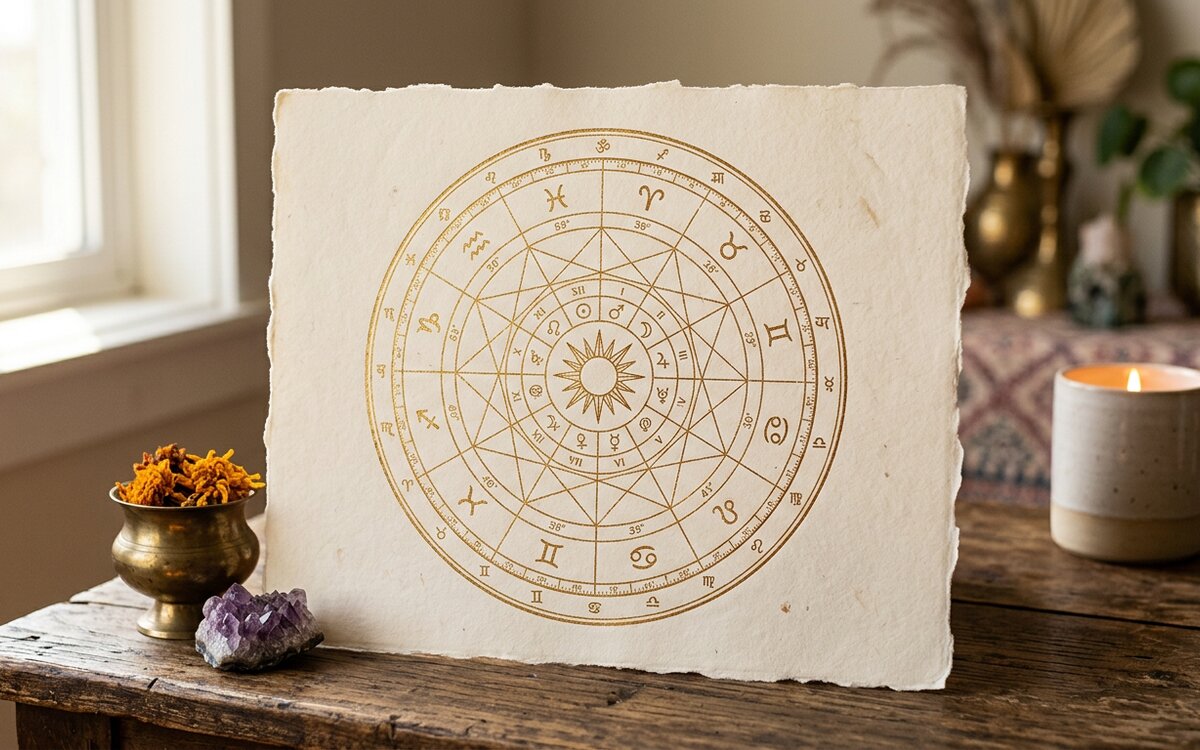
A birth chart (you’ll also hear “natal chart”) is a map of where the Sun, Moon, and planets were in the sky at the exact time and place you were born. Picture a snapshot of cosmic weather the moment you arrived—not a verdict on your life, but a sketch of tendencies: how you recharge, how you fight for what you want, how you bond, and where you might trip over the same story again and again.
Readers use that map to talk in human language: habits, timing, strengths, blind spots. You stay in charge; the chart is a conversation starter, not a cage.
Hang on—isn’t that just my zodiac sign from Instagram?
Not quite. Your Sun sign is one ingredient. Your full chart adds Moon, rising sign, house positions, and how planets “speak” to each other. That’s why two Leos (for example) can love differently, work differently, and stress differently.
So yes: your daily app line can be fun. A birth chart reading goes wider—it’s the difference between reading one line on a menu and actually sitting down for a meal.
The planet cheat sheet (no exam at the end)
You don’t need to memorise anything before a session. If you like a head start, here’s the super-short version:
- Sun — vitality, ego, the version of you that wants to feel alive and seen.
- Moon — feelings, comfort, what you need when you’re not “performing” for anyone.
- Mercury — how you think, text, learn, and explain yourself.
- Venus — affection, taste, what feels sweet in love and friendship.
- Mars — desire, courage, how you push for goals (or pick your battles).
- Jupiter & Saturn — growth and luck vs. lessons, limits, and long-game maturity.
A skilled reader doesn’t lecture you on each planet—they weave them into your story so it clicks.
Love: will the chart name my future spouse?
Let’s bust that gently: no ethical reading should promise a name, a face, or a wedding date. Real life needs communication, trust, and sometimes counselling—astrology doesn’t replace that.
What a chart can do is name themes: how you show care, what triggers you, what you need to feel safe, why certain dynamics repeat. In India, conversations often touch real contexts—family expectations, love marriage vs. arranged setups, joint families, long distance. The point is understanding, not judgement.
Think of it as weather advice for the heart: useful, not a guarantee of sunshine every day.
Career: will it tell me to become a CA or a coder?
Usually not in one rigid job title—and that’s freeing. Careers change shape; new roles appear every decade. The chart speaks more in themes: structure vs. freedom, solo deep work vs. people energy, stability vs. variety, public visibility vs. behind-the-scenes mastery.
People often book a birth chart reading when they feel stuck—burnout, a promotion that doesn’t fit, guilt about wanting a different path from what elders imagined, or “I’m good at this job but it doesn’t feel like me.” The goal isn’t a label stamped on your forehead; it’s a clearer story so your next move feels more honest.
Sometimes the insight is practical: seasons when learning or risk-taking is supported; times when patience and skill-building pay off more than jumping ship on impulse. Sometimes it’s emotional: naming why a “safe” job still feels hollow, or why you keep overworking to earn approval. None of that removes your responsibility to update your CV or have a tough chat with your manager—but it can make those steps feel less random.
What actually happens in a reading?
Every astrologer has their own style, but most sessions follow a friendly rhythm. You share accurate birth details and your questions. The reader opens your chart, explains a few key pieces in plain language, and connects those symbols to your life—love patterns, money stress, family pressure, health routines (as lifestyle themes, not medical diagnosis), or big moves.
You might hear dates or “phases” mentioned in a general sense; treat that as timing hints, not a calendar stamped in stone. You should leave with takeaways you can use: a clearer read on your needs, a reframed worry, or permission to try something different. If you leave more confused than when you arrived, keep shopping for a reader who listens.
Jaipur today, London tomorrow—does location change the chart?
Your chart is built from birth time and place, not your current city. So the same chart travels with you. What changes is the conversation: a good reader meets your reality—festivals you care about, work culture you’re in, family setup you navigate—whether you’re sitting across a table in Jaipur or joining from another time zone online.
What if nobody wrote down my birth time?
It’s common—hospital cards get lost, parents remember “after dinner,” not the clock. Don’t let perfect be the enemy of helpful. Date + place still unlock plenty; exact time refines pieces like rising sign and houses. Share what you honestly have—rough time beats a confident guess.
Four quick tips before you book
- Gather birth details: date, place, and time (certificate > memory > “ish”).
- Bring specific questions: moving cities, relationship patterns, job timing—not just “tell my future.”
- Expect guidance, not commands: you still choose your life.
- Keep experts in the loop: doctors, lawyers, therapists when those issues are serious—astrology is a support lens, not a substitute.
Faith, science, and the chart—can they coexist?
For many clients, yes. They use astrology as a reflective language—like journaling with a star map—not as a fight with belief or with science. You can stay curious and stay grounded at the same time.
Numerology, tarot, signature work—do I need them all?
Some people mix tools (numbers for cycles, tarot for a sharp question, chart for the big picture). Others stay with one path. There’s no prize for collecting the most methods—only what genuinely helps you think straighter and kinder about your choices.
Is my chart “bad” if someone said so online?
No chart is trash. Every layout has smooth roads and bumpy ones—that’s being human. If a reading leaves you scared or small, that’s not the right fit. The right conversation leaves you clearer, not cornered.
Why bother, then?
Because a thoughtful birth chart reading can be the moment you stop calling yourself “confused” and start seeing your patterns with compassion—especially around love, work, and your next chapter. It’s curiosity with kindness, not a cage built from stars.
Readers who blend astrology with numerology, tarot, or other tools may offer extra layers—your birth chart often stays the backbone because it’s anchored to one moment: the day you entered the world. That’s why it can still feel relevant years later, even as jobs and relationships change.
If you’re ready, come with honest questions and an open mind. The best use of a chart is simple: know yourself a little better—then walk forward in your own shoes, whether your path starts in Jaipur or on a screen halfway across the world.